From Southwest Virginia to one of the world’s leading labs on tick-borne illness, VCU’s opportunities are where they count
MLS program graduate Alex Counts is now pursuing a Ph.D. His journey started with a CHP guest speaker at his community college.
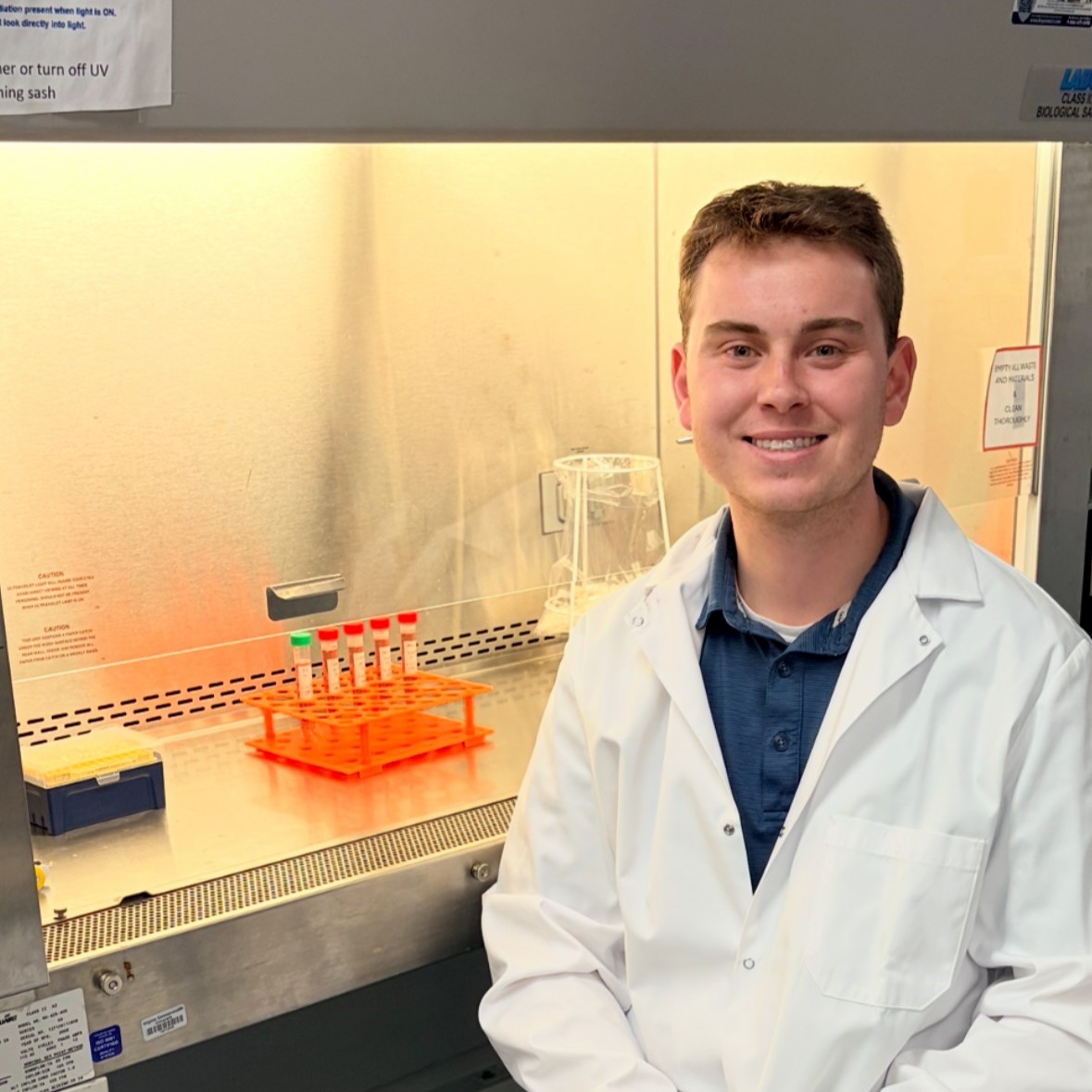 On a fall morning in 2019, students in a one-credit careers course at Southwest Virginia Community College filed into their classroom expecting another routine presentation. For Alex Counts – then a pre-med student from the nearby town of Lebanon – it became the moment that would shape the rest of his academic career.
Joshua W. Williams, Ph.D., coordinator of VCU’s Medical Laboratory Sciences (MLS) program in Abingdon, stood in front of the group and began explaining a field that Counts had barely heard of.
“Dr. Williams explained medical laboratory science and how it sometimes is viewed as behind the scenes – but then showing how it plays a direct role in patient care and in human health,” Counts said. “This caught my attention of something I would want to study and pursue a career in.”
The timing mattered. Growing up in Lebanon, a town of a few thousand tucked into the hills of Russell County, Counts had long been drawn to health care but wasn’t sure how to make it work. At that time moving to Richmond for this opportunity wasn’t feasible. However, VCU’s Abingdon distance-learning site changed that and he enrolled.
“Coming from the rural, underserved area, and having the opportunity to stay at home and also receive scholarships helped me financially,” he said, stressing the impact of VCU’s satellite campus on opening up career paths for local residents.
From the outset, the distance-learning model erased the miles between Abingdon and Richmond. Faculty rotated between in-person and virtual teaching, and the technology connecting the sites made students feel part of one program.
“We were five hours away, but it felt like we were right there,” he said.
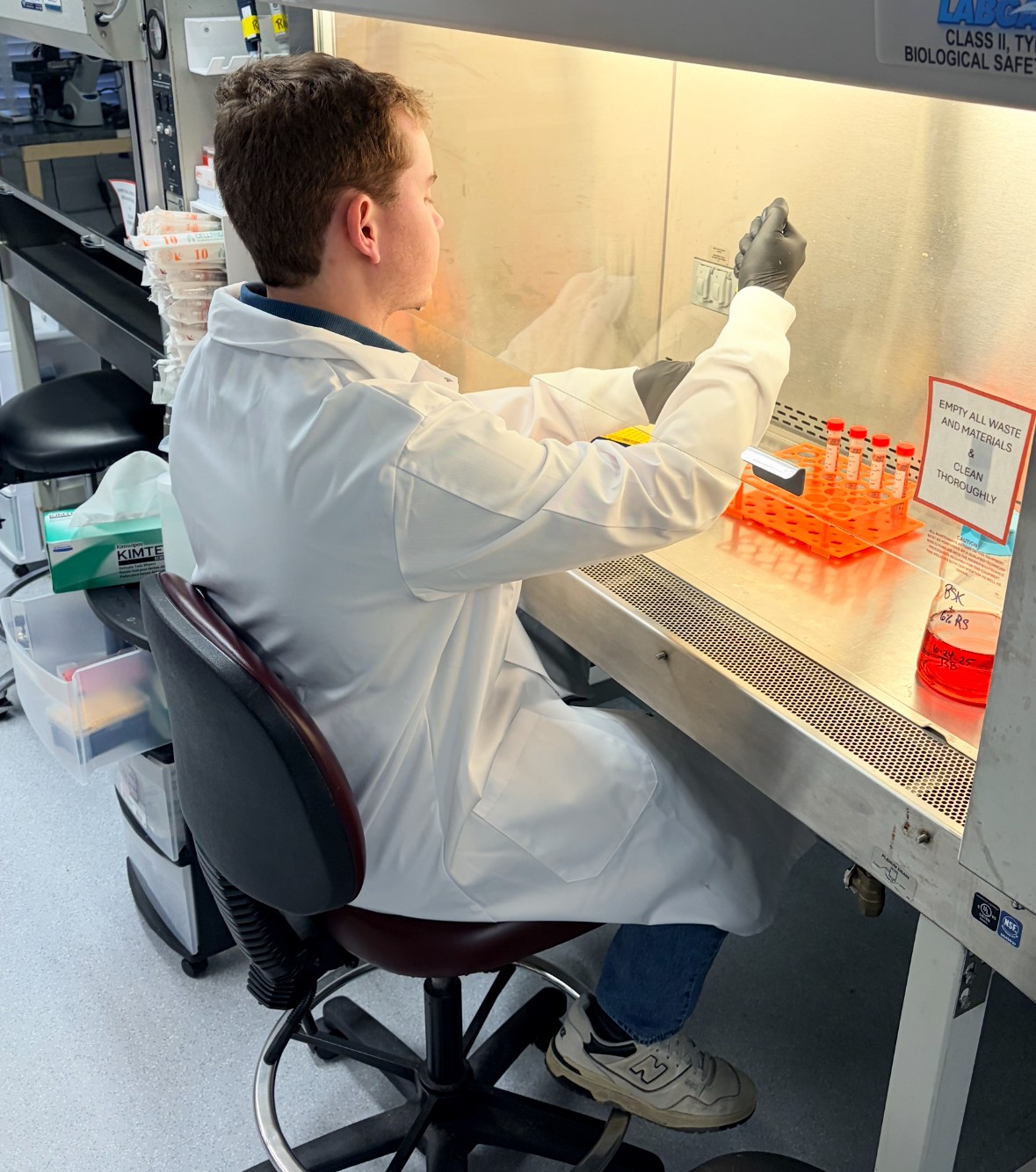 As his courses progressed, Counts moved from studying diagnostic science to performing it. He worked in a hospital laboratory in Abingdon while completing his undergraduate degree. It supported him academically while reinforcing his passion for the field. That experience pointed him toward research, and with encouragement from faculty, he made the step he once assumed was impossible: relocating to Richmond to earn his master’s degree in MLS, where he could enhance his research skills.
Counts joined the laboratory of Michael Lacy, Ph.D., where hands-on research became part of his daily life. “Dr. Lacy taught me so much, from troubleshooting to critical thinking skills and more,” Counts said. He also stepped into the profession’s instructional side, joining the adjunct faculty to teach immunohematology. “That experience shifted me to see that I really wanted to pursue a career in academia.”
Today, Counts is a Ph.D. student in the VCU School of Medicine, working in one of the most respected translational research environments in the country. In the laboratory of Richard Marconi, Ph.D. – a pioneer in Lyme disease and tick-borne illness research – Counts is part of a team developing diagnostic assays and vaccines with real-world clinical potential.
Counts’ specific project is centered around the intraerythrocytic parasite Babesia. “The project involves developing diagnostic assays to detect Babesiosis in both humans and companion animals,” he explained.
That includes creating a lab test that can reliably tell clinicians whether a patient or animal is infected — and just as importantly, whether they are not. Because babesiosis can be difficult to detect with existing tools, improved diagnostics could help patients receive faster, more accurate treatment and avoid delays or misdiagnosis. “The end goal is to have a diagnostic assay that can be implemented in clinical laboratories,” Counts said.
The leap from a rural community college to a leading infectious disease lab might seem unlikely. But Counts stresses that his MLS education gave him the infrastructure, access and confidence.
“I've seen firsthand how essential these diagnostic assays are for patient health,” he said. “The MLS program built that foundation to allow me to pursue this research.”
As Counts reflects on the path from Lebanon to Richmond, he thinks not only about what he’s gained but about what students in Southwest Virginia can have, too.
“Believe in yourself,” he said. “There are opportunities there, like this one, that can be achieved if you go after it.”